
Blog · TV Wall Mounting · 2 August 2026
Can You Mount a TV on Plasterboard?
Yes, in most cases — but what's actually behind the plasterboard matters far more than the board itself when it comes to choosing a safe fixing.
Short answer: Plasterboard alone should never be assumed capable of carrying a television. Depending on the wall construction, board type, television weight and bracket, the installation may require studs, masonry, reinforcement or specialist load-rated fixings.
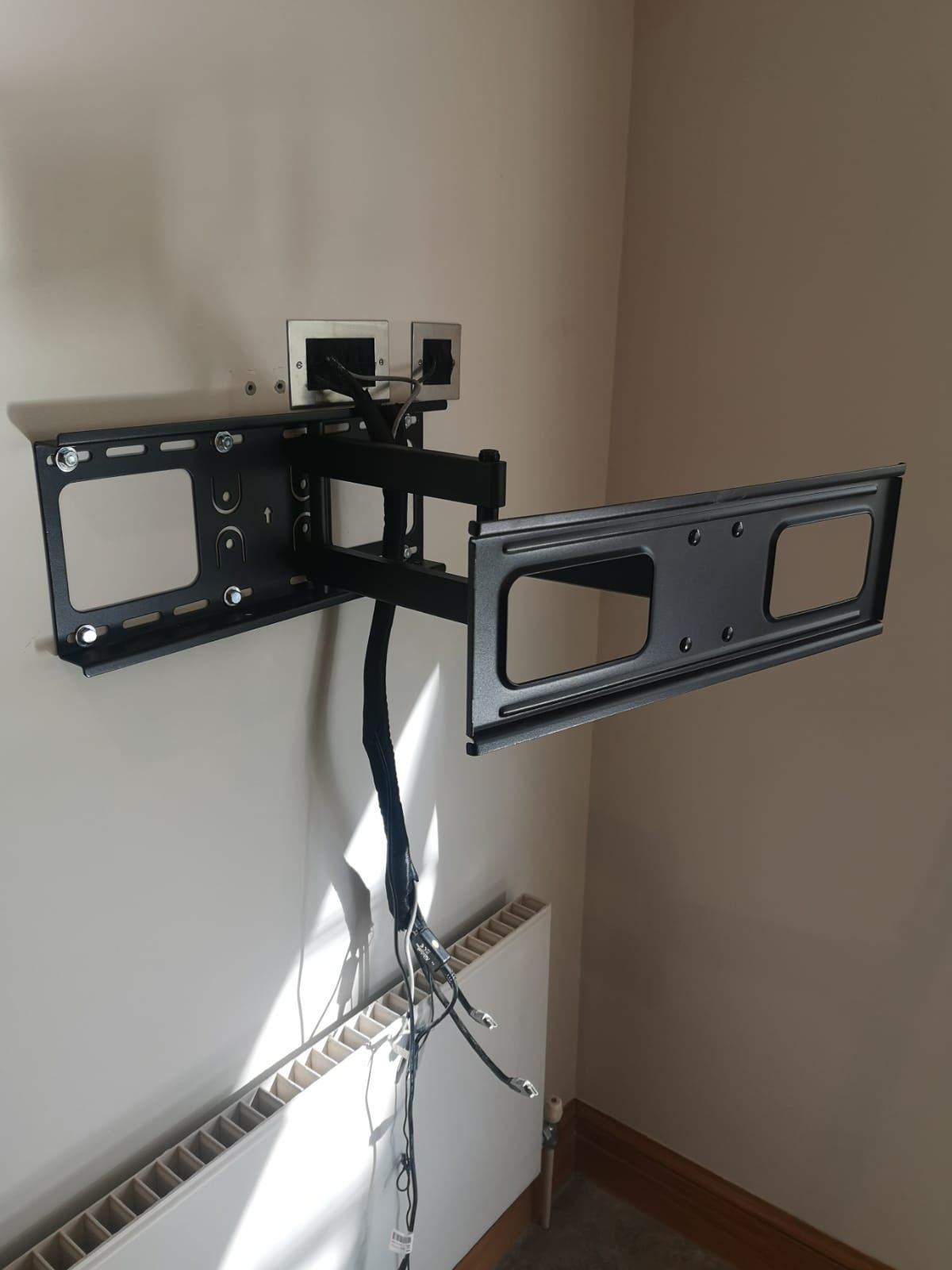
Stud walls
A stud wall is plasterboard fixed to a timber or metal frame, with the frame providing most of the strength. Plasterboard alone should never be assumed capable of carrying a television — on a stud wall, the fixings generally need to reach the studs (or noggins fitted between them) behind the board, which usually means locating them accurately before drilling.
Dot-and-dab plasterboard
Common in newer or renovated homes, dot-and-dab plasterboard is fixed to a masonry wall using blobs of adhesive rather than a continuous timber frame, leaving an air gap behind the board. This is a different fixing challenge again — standard cavity fixings aren't designed for this air gap and construction, and the wrong fixing can fail or damage the board.
Plasterboard over solid masonry
Where plasterboard is dry-lined directly onto solid brick or block with no cavity, it's sometimes possible to fix through into the masonry behind, which is generally a stronger option than relying on the plasterboard layer alone — but only once the exact wall build-up has been confirmed.
Hollow cavity walls
Some internal partition walls are hollow throughout, with no solid backing at all. These need fixings specifically designed to spread load across the board itself, and are generally only suitable for lighter televisions.
Why wall construction must be identified first
Every one of the wall types above needs a different fixing approach, and there's no way to tell which type you have simply by looking at the painted surface. Getting this wrong is one of the most common reasons wall-mounted TVs come loose or fall.
TV size and weight
Larger and heavier televisions put more load on both the bracket and the wall fixings. The correct fixing solution depends on the specific television's weight combined with the wall type — not on screen size alone.
Fixed versus extending (full-motion) brackets
A fixed bracket holds the TV flat and close to the wall. An extending or full-motion bracket lets the TV pull out and swivel, which is more convenient, but concentrates more leverage on the fixing points when the TV is extended — meaning the wall and fixings need to be capable of handling that extra force safely.
Suitable supporting structures and fixing considerations
Depending on the wall type, a suitable fixing might mean locating timber studs, fitting additional timber noggins behind the board, using specialist cavity fixings rated for the load, or fixing through to solid masonry behind the plasterboard layer. The right choice depends on the wall build-up and the television being mounted, assessed together rather than separately.
Cable routing
Once the television is safely fixed, cables can usually be run neatly using either surface trunking or a concealed route through the wall cavity, depending on the wall type and what's already behind it. See our separate guide on hiding TV cables for the options in more detail.
🚧 Before drilling into any wall, it's important to check for hidden electrical cables, pipework and the actual wall construction. Where the wall type is uncertain, or a heavier television is involved, a professional assessment avoids a costly mistake.
Risks of incorrect installation
A television fixed with the wrong approach for the wall type can pull loose gradually, sometimes with no warning until it fails. Beyond the risk to the TV itself, a falling television is a genuine safety hazard, particularly in a household with children or pets nearby.
When professional assessment is recommended
If you're not confident identifying your wall type, mounting a larger or heavier television, using an extending bracket, or routing cables through the wall, our TV wall mounting service assesses the wall, TV and bracket together before any fixing goes in.
AV Infusion is based in Welwyn and provides TV aerial, satellite, CCTV and TV wall-mounting services throughout Welwyn Garden City and the wider Hertfordshire area.
Frequently Asked Questions
Can any TV be mounted on plasterboard?
It depends on the wall construction behind the plasterboard and the weight of the television, not the plasterboard alone. Some combinations need fixings into studs or masonry rather than the board itself.
How do I know what kind of wall I have?
Wall construction isn't always obvious from the surface. A professional can identify stud, dot-and-dab, solid masonry or hollow cavity construction before recommending a fixing method.
Are full-motion brackets safe on plasterboard?
They can be, but an extending bracket puts more leverage on the fixing points when pulled out, so the wall and fixings need to be specifically capable of handling that extra force.
Do heavier TVs always need a different fixing?
Generally yes — a heavier television needs a fixing solution rated for its weight and the specific wall type, which is why weight and wall construction are assessed together rather than judged from screen size alone.
Can I hide the cables at the same time as mounting the TV?
In most cases yes, using either surface trunking or a concealed cable route depending on the wall type — see our guide on hiding TV cables for the options.