
Blog · TV Wall Mounting · 2 August 2026
How Can TV Cables Be Hidden When Wall Mounting a TV?
A wall-mounted TV looks best with no trailing cables in sight — here's how concealed and surface options actually compare, and which suits which wall.
Short answer: TV cables can be hidden either by routing them inside the wall cavity for a fully concealed finish, or by using slim surface-mounted trunking — the right choice depends on your wall construction, whether a socket needs moving, and how much disruption you're willing to accept.
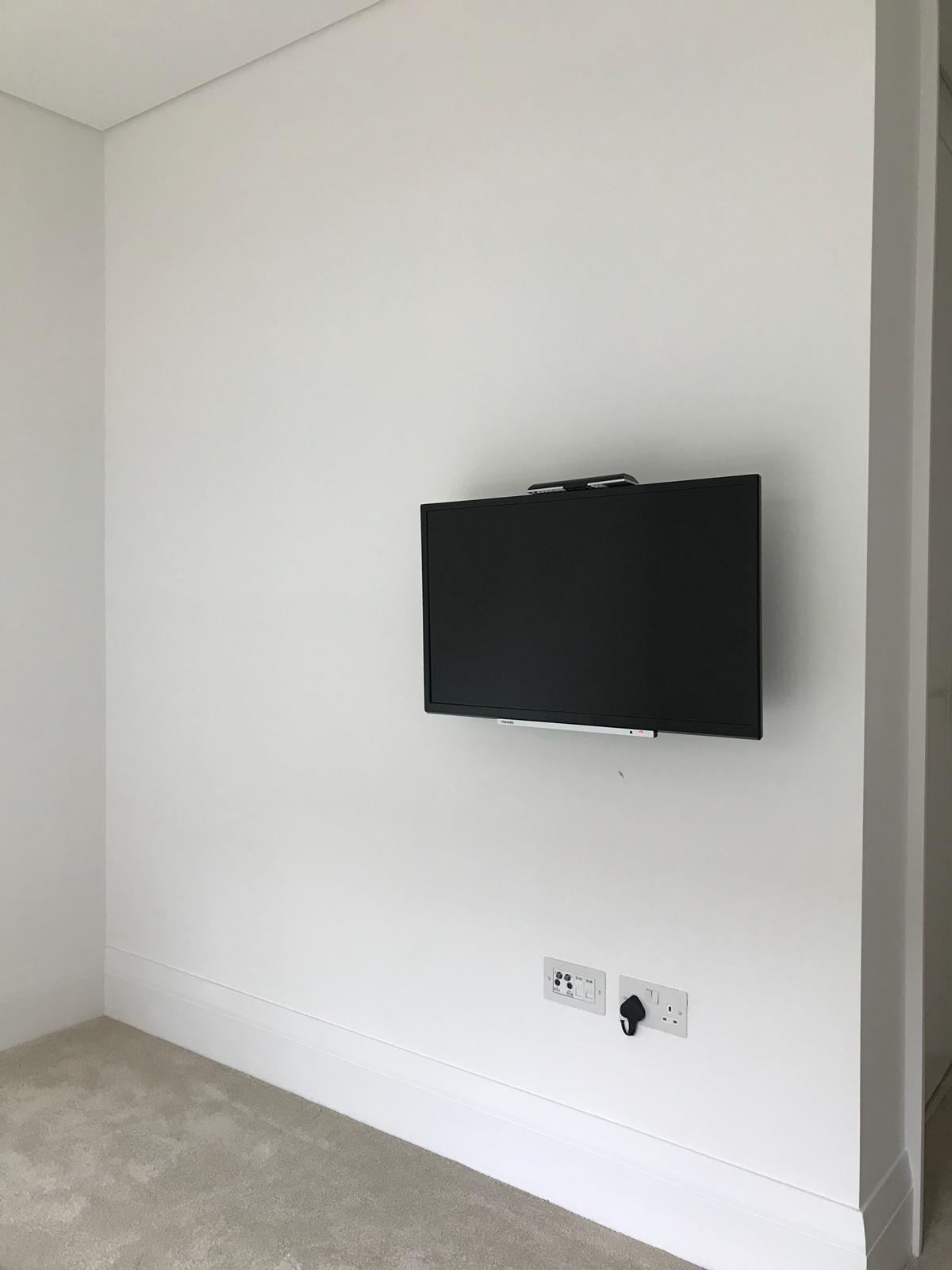
The two basic approaches
There are really only two routes for tidying cables on a wall-mounted TV: run them inside the wall (concealed), or run them along the surface neatly (trunking). Which one suits a particular room depends on the wall type, whether a power socket needs moving, and how much disruption you're happy with.
Internal cable concealment
This routes cables inside the wall cavity, usually via a rigid conduit fitted from behind the TV down to a lower faceplate, so nothing is visible at all. It gives the tidiest possible finish, but the fitting method depends heavily on the wall type — a stud wall with an open cavity is generally the most straightforward, while solid masonry usually requires channelling into the wall itself.
Surface-mounted cable trunking
A slim, paintable trunking channel fixed to the wall surface and running down to the nearest socket or media unit. It's quicker to fit, involves no cutting into the wall, and can be painted to match — a sensible option on solid walls where concealment would mean more disruptive work.
Stud walls
Stud walls with an open cavity behind the plasterboard are usually the easiest to run cables through internally, since there's a clear route down to a lower faceplate without needing to chase into masonry.
Dot-and-dab walls
The air gap behind dot-and-dab plasterboard can sometimes be used to route cable, but the adhesive dots themselves can obstruct a straight run, so this needs to be checked before committing to a fully concealed route.
Solid brick or block walls
Concealing cable in solid masonry generally means chasing a channel into the wall, which is more disruptive and typically needs replastering afterward. Surface trunking is often the more practical choice here unless a fully concealed finish is a priority.
Power cables
If there's no power socket near where the TV will sit, a cable route can be planned so that a socket is moved or a new one added behind or beside the TV — this is electrical work and must be carried out by someone appropriately qualified.
HDMI cables
HDMI cables can be run through most concealment methods, though very long internal runs occasionally need a higher-quality cable or a signal booster to maintain picture quality reliably.
Aerial and satellite cables
Coax cable for an aerial or satellite feed can usually be routed alongside HDMI and power cables in the same concealment method, so long as the whole cable run is planned together rather than added piecemeal afterward.
Soundbar and games-console connections
If a soundbar, games console or media player will sit below the TV, it's worth planning for their cables (power, HDMI, and sometimes a separate audio cable) at the same time, rather than opening the wall again later.
Planning for future equipment
Leaving a little slack in a concealed cable run, or including a spare cable alongside the ones needed now, avoids having to redo the work later if you add another device such as a games console or streaming box.
Advantages and disadvantages of each option
| Consideration | Concealed (in-wall) | Surface trunking |
|---|---|---|
| Visual finish | Completely hidden | Neat but visible, paintable to match |
| Disruption | More, especially on solid walls | Minimal, no chasing into the wall |
| Cost/time | Generally higher | Generally lower |
| Adding cables later | Can mean opening the wall again | Straightforward to add another cable |
| Best suited to | Stud walls, new socket positions | Solid walls, rented properties, quick turnaround |
🚧 Moving or adding a mains socket is electrical work and should only be carried out by someone appropriately qualified. Concealing an unsuitable mains cable inside a wall without the correct method can be a genuine fire and safety risk.
Questions to consider before the television is mounted
- Is there a power socket within reach, or does one need moving?
- What's the wall construction — stud, dot-and-dab, or solid masonry?
- Will a soundbar, console or streaming box also need cables run?
- Is a fully hidden finish a priority, or is tidy surface trunking acceptable?
- Is the property rented, where a less permanent solution may be preferred?
Our TV wall mounting service includes both concealed and surface cable options, planned around the wall type and equipment involved — see our related guide on mounting a TV on plasterboard for how wall construction affects both the bracket and the cable route.
AV Infusion is based in Welwyn and provides TV aerial, satellite, CCTV and TV wall-mounting services throughout Welwyn Garden City and the wider Hertfordshire area.
Frequently Asked Questions
Is it better to hide cables in the wall or use trunking?
It depends on the wall type and how much disruption you're willing to accept. Stud walls are usually straightforward to route through; solid masonry often makes surface trunking the more practical choice.
Can you add a new power socket behind the TV?
Yes, this can be planned as part of the installation, but moving or adding a mains socket is electrical work that must be carried out by someone appropriately qualified.
Will hiding the cables affect picture quality?
Not normally, though very long concealed HDMI runs can occasionally need a higher-quality cable or booster to maintain a reliable picture.
Can I add another device later if the cables are hidden in the wall?
It's easier if a spare cable or some slack was left during the original installation. Otherwise, adding a new device later may mean opening the wall again.
Is surface trunking a good option for a rented property?
Often yes, since it avoids permanent changes to the wall and can usually be removed later without significant repair work.