
Blog · CCTV · 2 August 2026
Wired vs Wireless CCTV: Which Is Better for Your Home?
Both have a genuine place — the right choice depends on your property, not which option sounds more modern.
Short answer: Wired CCTV generally suits permanent, whole-property installations with the most consistent picture quality, while wireless suits outbuildings, quick retrofits, or specific spots where running cable isn't practical — many homes use a mix of both.
What "wired" and "wireless" actually mean
A wired system connects cameras to a recorder using network or coax cable. A wireless system sends video to a hub or recorder over Wi-Fi. The terms describe how video gets from camera to recorder — not necessarily how the cameras themselves are powered, which is a separate question.
Do wireless cameras still need power?
In most cases, yes. "Wireless" typically refers to the video connection, not the power supply — most wireless cameras still need a mains cable or a rechargeable battery that requires periodic charging. Fully cable-free cameras exist, but usually with battery life and performance trade-offs.
Reliability
Wired connections are generally more consistent, since they aren't affected by Wi-Fi interference, signal strength, or distance from the router. Wireless systems can perform very well too, but their reliability depends more on the property's Wi-Fi coverage at each camera position.
Picture quality
Wired systems can typically sustain higher resolution and frame rates consistently, since cable bandwidth doesn't fluctuate. Wireless picture quality can vary with signal strength, occasionally dropping resolution or frame rate automatically to maintain a connection.
Wi-Fi coverage
A wireless camera is only as reliable as the Wi-Fi signal reaching its exact mounting position — often at the edge of a property, near a boundary or outbuilding, which is precisely where Wi-Fi signal is often weakest.
Local recording
Both wired and wireless systems can support local recording to a hard drive, though this depends on the specific system rather than being guaranteed by either category.
Cloud recording
Wireless systems more commonly default to cloud recording, sometimes with an ongoing subscription cost for extended storage. Wired systems more commonly default to local recording, though cloud options exist for both.
Installation disruption
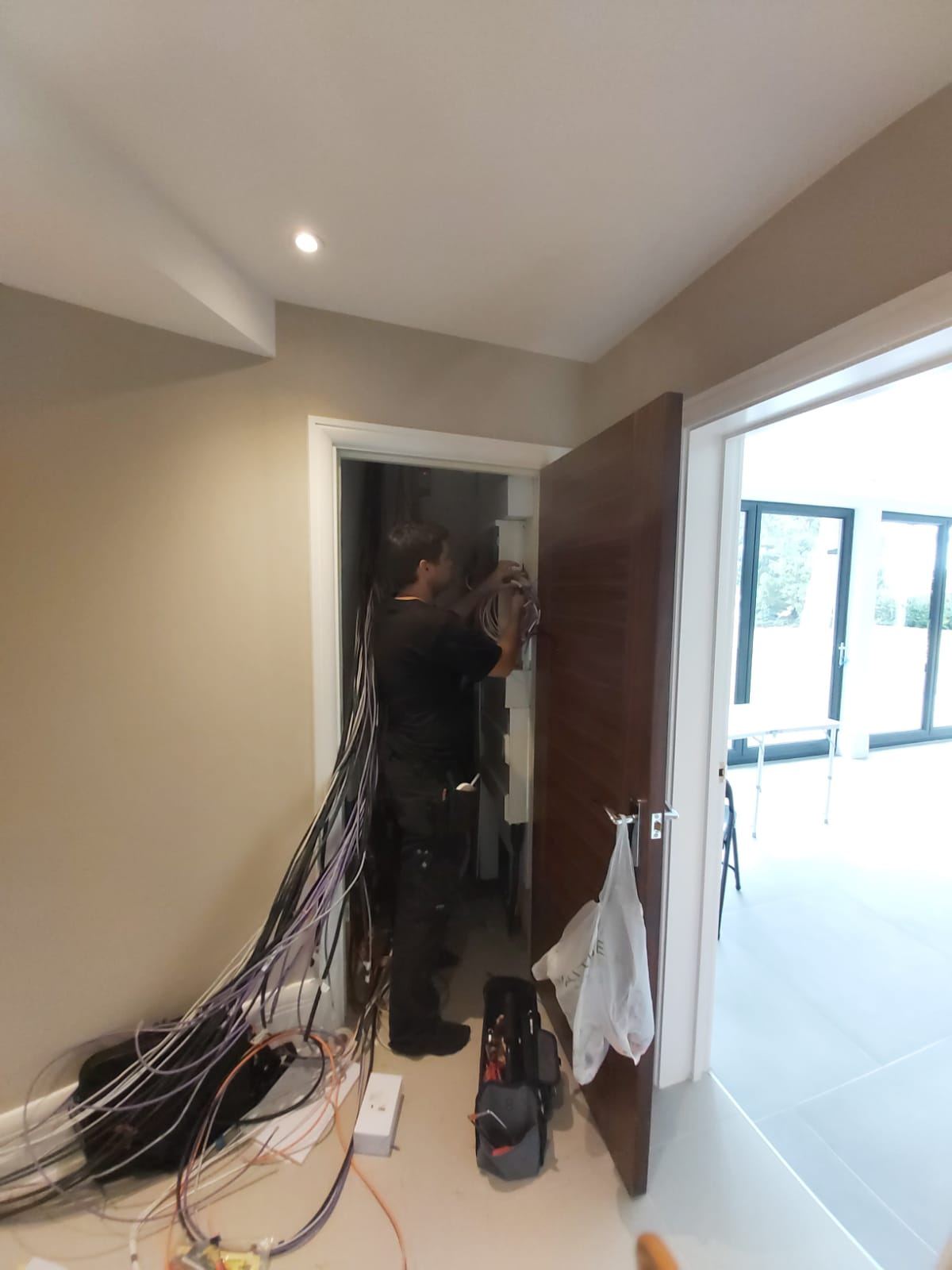
Wired systems generally involve more disruption during installation, since cable needs to be routed to each camera position, sometimes through walls or lofts. Wireless systems avoid most of this, which is part of their appeal for retrofitting to an existing property.
Maintenance
Wired systems have very little ongoing maintenance once installed correctly. Battery-powered wireless cameras need batteries checked and recharged or replaced periodically, which is an ongoing task rather than a one-off.
Battery charging
For battery-powered wireless cameras, charging frequency depends on usage, temperature and how much motion activity the camera detects — cameras covering busy areas will typically need charging more often than those covering quiet corners.
Remote access
Both wired and wireless systems can offer remote phone viewing, provided the recorder or cameras have an internet connection — this comes down to the specific system chosen, not whether it's wired or wireless.
Security
Both types need strong, unique passwords and up-to-date firmware. Wireless systems have an additional consideration around Wi-Fi network security, since video is transmitted over the airwaves rather than a physical cable.
Detached garages and outbuildings
Getting a wired connection to a detached garage or outbuilding usually means running a cable run across the garden, which can be disruptive. Wireless can be a practical solution here, provided Wi-Fi signal actually reaches the building reliably.
Terraced, semi-detached and detached homes
Whether a property is terraced, semi-detached or detached isn't on its own a reliable guide to Wi-Fi coverage. What actually determines it is the router's position, the building materials in the way (thick period walls and dense masonry attenuate Wi-Fi more than modern stud walls), the distance from the router to the camera, interference from other wireless equipment, and the exact location a camera needs to be mounted. A small terraced house with the router at the wrong end can have a weaker signal at the back door than a larger detached property with good router placement.
Comparison at a glance
| Factor | Wired | Wireless |
|---|---|---|
| Reliability | Consistent, unaffected by Wi-Fi | Depends on Wi-Fi signal strength |
| Picture quality | Sustained high resolution | Can vary with signal strength |
| Installation | More disruptive, cable routing needed | Quicker, minimal disruption |
| Maintenance | Low | Battery charging if not mains-powered |
| Best suited to | Permanent whole-property systems | Retrofits, outbuildings, specific spots |
When a hybrid setup may be suitable
Many homes benefit from a mix: wired cameras covering key entrances and driveways for consistent quality, with a wireless camera added for a detached garage, shed or spot where running cable isn't practical.
For the related question of whether any of this needs an internet connection at all, see our guide: Does Home CCTV Need Wi-Fi?
AV Infusion is based in Welwyn and provides TV aerial, satellite, CCTV and TV wall-mounting services throughout Welwyn Garden City and the wider Hertfordshire area.
Frequently Asked Questions
Is wired or wireless CCTV better?
Neither is universally better — wired systems tend to suit permanent, whole-property installations with consistent picture quality, while wireless suits specific locations, outbuildings, or retrofits where running cable isn't practical.
Do wireless cameras still need a power cable?
Most do, either a permanent mains connection or a rechargeable battery. "Wireless" usually refers to the video connection rather than the power supply.
Will Wi-Fi cameras work in a detached garage?
Only if Wi-Fi signal actually reaches that location reliably. If not, a wired connection or a Wi-Fi extender may be needed.
Can I mix wired and wireless cameras in one system?
Yes, a hybrid setup is common — wired cameras on key entrances with a wireless camera added for a harder-to-cable location.
Which type is more secure?
Both need strong, unique passwords and up-to-date firmware. Wireless systems have an additional consideration around Wi-Fi network security, since video travels over the airwaves rather than a cable.